


Bogs
Poem ending with a line by Tonnus Oosterhoff
Round the back of the Dining Hall,
a redbrick block of them, open
to the elements, unchanged
since my father.
A better bet were the parents’.
Absorbent paper, and because you had trekked
to get there, a modicum
of privacy.
Or, much later, the girls’.
No one was allowed near these.
Plus you had to know one.
Nobody escaped from that time.
‘Bogs’ is from Plymbridge by Anthony Wilson (Worple Press, 2026) — big thanks to Worple for letting us reproduce it here.
Is it a pamphlet? Is it a book? And does it matter which Plymbridge is? I’ll work out what I think about that that as I read it, but for starters I check with a pamphlet editor, who insists that her pamphlets have no more than 20 poems. Plymbridge has 24, so that makes it a book. Another pamphlet editor tells me 24 is definitely a pamphlet. But look at the price: does £10 make it a book? (That’s 42p a poem.)
Some years back, it was simpler: you’d could have said books have spines and pamphlets have staples, and staples limit the number of sheets that can be folded together. Contemporary printing has changed that: out with the staples and in with the glue – so now, for example, all of Verve’s pamphlets have spines (and those I have on my shelves range from 12 to 31 poems). Yet still with us seems to be the supposition that pamphlets can offer a good way for younger poets to start publishing, as well as the notion that published poets can use the pamphlet form to explore a specific theme.
I start by mentioning these thoughts because I find them getting in the way while reading Plymbridge – how to place it? – are my expectations about pamphlets / books interfering with my reading? (Yes they are.)
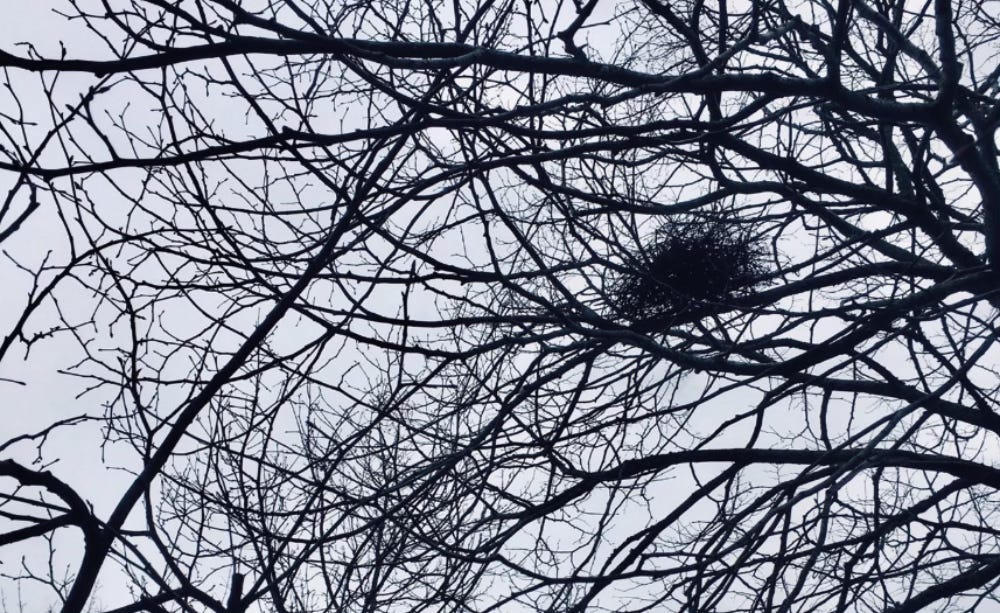
Plymbridge “is named after the hidden wooded valley on the northern edge of Plymouth close to where Anthony Wilson now lives. Rich with wildlife, it is also marked by its industrial past” is how the cover blurb begins. The book opens with a long two-part poem about the rivers Exe and Plym, both of which have wonderful evocations of water, from some “pea-green lagoon-sludge” in the Exe to the Pym’s
[…] reverse-eddies
crawl up-stream, what was
mirrorsurprised to find itself
rainbow.
(It’s a shame, though, when there is plenty of blank space to play with, that the very first page has been set with a terrible page turnover, cutting off “a beach of brown froth / at rest” from its stanza’s final line, “on a beach of grey shale.”)
This rivers poem – and, likely, the cover image of an empty nest tangled in bare winter branches – are all that we have of Plymbridge itself: perhaps for Antony Wilson, Plymbridge is the place to look back from, a place where memories resurface for the book. Schooldays certainly do – from ‘Fresh Air’s “drum solo in Los Endos, / so loud we miss the bell / at the start of prep” to the effective compressions of ‘Time in a School House’:
Riotous choirs, punishment dawns.
Eventually, trunks, large cars.
And Squire said have a nice life.
There’s also a poem titled ‘Bogs’ (goodness, I’d forgotten about school bogs) and one about a launderette. I remember reading and re-reading this poem, ‘In the Launderette with Adam Zagajewski’, when I first came across it in a magazine. The narrator takes a book by Polish poet Zagajewski to the launderette and, among chance encounters:
[…] I gave a reading
of your elegies to the empty drums,
your parents clearer than childhood.
The ‘you’ of the poem ‘Class’ is another poet to whom Anthony Wilson gives thanks. After reading Careful What You Wish For, “Cover-to-cover and back-to-back twice, / as I do, once before sleeping / then between zeds”, his thanks are for being made “richer” by it in a wonderfully convoluted train of thought in which he borrows the tumultuously long sentences, which the (un-named) ‘you’ flourishes so casually himself. (Goodness, that type of long sentence structure is obviously infectious.) Anthony Wilson doesn’t name this poet ... but does offer the clue of “Carcanet, 2015” if you don’t recognise the book’s title.
Similarly, the poem ‘The Singer’ leaves you to work out it’s a poem of thanks to Andrew Rumsey (now Bishop of St.Albans).
Between their lines, many poems carry a sense of looking – and of appreciation
Between their lines, many poems carry a sense of looking – and of appreciation. That’s probably true of the ‘found’ poems, too. ‘Biographical Details’ is a ‘found’ bio pulled from Faber’s Poetry Introduction 7, which had me wondering for a while which of its poets “Now lives in Southampton”, when I know which one
Has completed research
onto the impact of acid rainon Cumbrian tarns
and – since that researcher doesn’t live in Southampton – the penny dropped about how the poem was built from its ‘found’ fragments in that book.
Adam Zagajewski appears again (named) in ‘Adam Zagajewski Visits Lvov’, a poem found from Should We Visit Sacred Places? translated by Clare Cavanagh. He opens the hotel curtains to the garden
where one of my nineteenth century cousins,
a lawyer and a poet, caught such a bad cold
that he died soon after of pneumonia and ever since
has been reduced to an elegant shadow
in an oil portrait.
In a lighter vein, even body parts get their appreciation in ‘My Knees at Sixty-Two’:
How present you suddenly are
after years of ignoring you
by doing nothing
more than getting up each day
and going in to work.
This looking-back may well be preferable to looking ahead: “I am frightened of bungalows” is nicely understated. “Please / do not send me there!”
I find myself referring to Plymbridge as a book, rather than a pamphlet. It has the feel of a book; it has pages I can move between, poems I can re-read – but just when I’m getting into the swing of it, here I am left sitting on the tarmac, finding it’s all over. It’s too short. I don’t recall ever having said that of a book before.
Addendum: In view of recent headlines about accusations of rape on the C4 programme Love at First Sight (where the TV company matches people up and they “marry" at first sight and then see how they get on), I must also mention Anthony Wilson’s short poem ‘At first Sight’ – yes, he anticipated the problems and has already written the poem: “it’s clear she can’t love him, can’t bear / even to look at him.” The second of his two stanzas hastens to explain. He’s “appalled at myself /... a show I found by accident, / after my thriller had come to its grisly, inevitable end”. (Now there’s a line to ponder.)
Jane Routh has published five poetry collections with smith|doorstop. Her first, Circumnavigation, won the Poetry Business Competition and was shortlisted for the Forward Prize for best first collection; Teach Yourself Mapmaking received a Poetry Book Society Recommendation. She has taken first prize in the Academi Cardiff International Poetry Competition (with the title poem of The Gift of Boats) and in the Strokestown International Poetry Competition. She contributes reviews and non-fiction to several publications.
Vital Statistics: The Friday Poem has 3700-plus subscribers. It’s run by four people – Hilary Menos (Editor), Helena Nelson (Consulting Editor), Bruno Cooke (Spoken Word Editor) and Andy Brodie (Web Editor), with contributions from a team of reviewers and writers.
Until recently we maintained the Friday Poem website (thefridaypoemdotcom) as an archive of 700 posts published between 2021 and 2024 (including most of the original Friday poems) but following a catastrophic hack in late April we made the difficult decision to take this down. We’ll be republishing some of these posts – Friday Poems, features and reviews – here on Substack.
Help support The Friday Poem
Buy us a coffee to help us stay awake as we strive to bring poetic excellence to your inbox every Friday. Heartfelt thanks to everyone who donates, especially to our regular donors. If you can’t afford it, no worries, we’re going to keep on doing it anyway! Big thanks for everything, you lovely poetry peeps.
Really enjoyed this sensitive review by Jan Routh. I think 24 is a pamphlet. :-)