


The 46th Lancaster Literature Festival is on RIGHT NOW – it runs from 7th to 17th March – and as part of the festival the three winners of the Litfest / Wayleave Press north-west Poetry Pamphlet Competition are launching their pamphlets with readings on Saturday 15th March at 1pm. That’s tomorrow. There’s still time to book (details of all Litfest events available here) but if you miss out, almost all of the events will be available online for 30 days after the festival ends.
The three winning poets are Rebecca Bilkau with her pamphlet Still Life, Maria Isakova-Bennett with Subcutaneous, and Clare Proctor with Lilith Speaks. I have to confess to wariness when I read that title, ‘Lilith Speaks’. I suppose every generation of women has to rediscover the myth of Lilith, the first woman in Paradise, who refused to obey Adam and was replaced by the more compliant Eve. I first came across her in the 1980s through the usual teenage discussions about politics, religion and sexism, then in the writings of Betty Friedan, Germaine Greer and Adrienne Rich. Lilith features regularly in feminist poetry of the seventies and eighties – Michelene Wandor has a particularly neat poem, ‘Eve to Lilith / Lilith to Eve’, in her book Gardens of Eden – poems for Eve and Lilith (Journeyman Press, 1984). Lilith has long been a symbol of female independence and rebellion. Can Clare Proctor say something new and relevant about her?
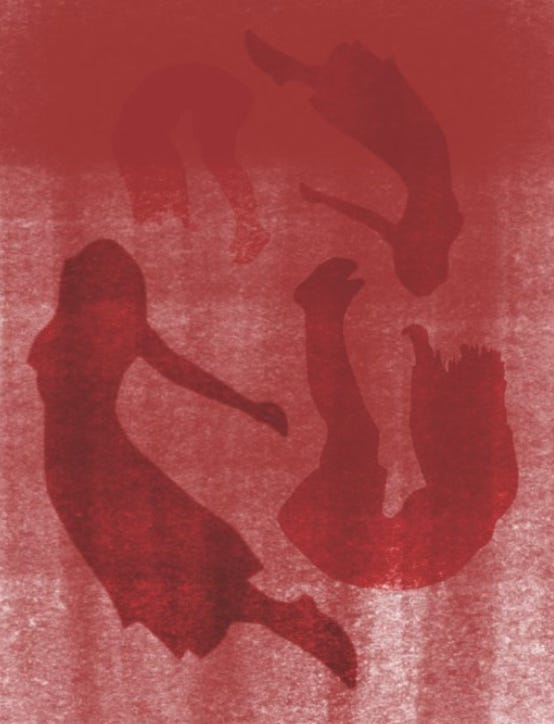
Lilith Speaks is full of powerless females and powerful males. There are silenced girls mouthing their desire into pillows, women clenching their fists so hard they damage the skin of their hands, women ill-at-ease with their own bodies, and a selkie whose seal skin has been stolen from her. Men, on the other hand, are hunters, bear-like, strong. They muffle women, skin them, bone them, and render them invisible. Some even force the women to erase themselves; in ‘The Next Wife’ the women “spends the light hours cleaning” until she cleans herself into nothing, and ”the light shines right through her”.
Proctor vividly highlights a wide range of restrictive views on women, and we infer her biting irony. For example, in the prose poem ‘Sappho’s Leap’, when women jump off cliffs, their “fragile forms should be the shape of a crescent as they dive, a flattering silhouette. The women can be gentle and sentimental or fierce and tragic, but at all times when jumping from cliffs, the women should be beautiful.” Similarly they “should avoid ugly crying, or they may not be a fitting subject for a painting.” But is Lilith-type rebellion against such stereotypes not well established these days?
Proctor vividly highlights a wide range of restrictive views on women, and we infer her biting irony
A kind of push-back comes with a poem about witches who keep amputated penises as pets, inspired by the fascinating Malleus Maleficarum, a 15th century witch hunting manual, which claimed that “Witches ... collect male organs in great numbers, as many as twenty or thirty members together, and put them in a bird’s nest, or shut them in a box. They move themselves like living members and eat oats and corn, as has been seen by many.” This is memorable and amusing, and pleasingly grotesque:
Sometimes we fight
to hold our favourites,
feel them fattening
between our hands.
The poem ends with a sting in the tail, another insult aimed at the male ego. I was perhaps hoping for something a bit more powerfully ’Lilith’. After all, she was a powerful, ballsy babe who demanded equality with Adam and abandoned the Garden of Eden. The strongest lines here harness that energy and anger.
Maria Isakova-Bennett’s pamphlet Subcutaneous is about her grandfather, Samuel, born in Elisavetgrad (now Kropyvnytskyi) in Ukraine, and his enforced migration to England. Samuel’s journey begins in the second poem, ‘Lviv, Winter, 1907’. Isakova-Bennett’s language, like Samuel’s situation, is spare, spartan, unforgiving, but still gives us all the details we need. He packs five books, plus “underwear, / shears, needles, twine, a bolt of suiting.” Then, “Heading for work, // he turns left instead of right, / takes a tram. No return”. There’s no full stop at the end of the poem – it’s appropriately open-ended. ‘Departure’ shows the mechanics of his leaving: ship, then sea, then ship, with sea beneath “and across” the deck. Again, the language is economical, pared to the bone. In ‘Glass of Water’ the single room Samuel settles in is furnished with just “a bed, a trunk, one chair”. Isakova-Bennett understands that less is more; she can handle the press of white space.
Isakova-Bennett understands that less is more; she can handle the press of white space
But the story of Subcutaneous is more than the story of one man; it’s also about how Samuel’s flight affects his family down the generations. This is approached aslant rather than tackled head on. In ‘My father is a complicated sentence,’ Isakova-Bennett describes her father as “all imperatives. / Do not. Don't. Do not let”. In ‘My father Drinking, the Queen Anne, 1985’ he has “taut muscles, fists clenched on the bar”. She tries to draw him, and describes her own drawing: “the lines of him stagger, direction uncertain, scribble / over themselves. Marks barely return to their source.” When he tries to make a garden and plant violas, she lists the obstacles that lie in his way; these include “he had no friends, // the costs of tools, his father's surname”.
Two poems seem to suggest that Isakova-Bennett herself may have struggled with some of the fallout from her grandfather’s experiences. ‘She is a chiffchaff’ is a brief three-stanza poem that gets slighter as it goes on, stanza by stanza, implying some kind of reduction or restriction of activity. ‘What helped you when you were suffering?’ lists translation, tapestry and God as supports, before ending with the Stanley Gibbons Catalogue and the joy of stamp collecting:
[…] arranging stamps in rows chronologically (tweezers, hinges)
Changing my mind
Arranging stamps in rows geographically,
or in themes — flowers, sea, transport, animals
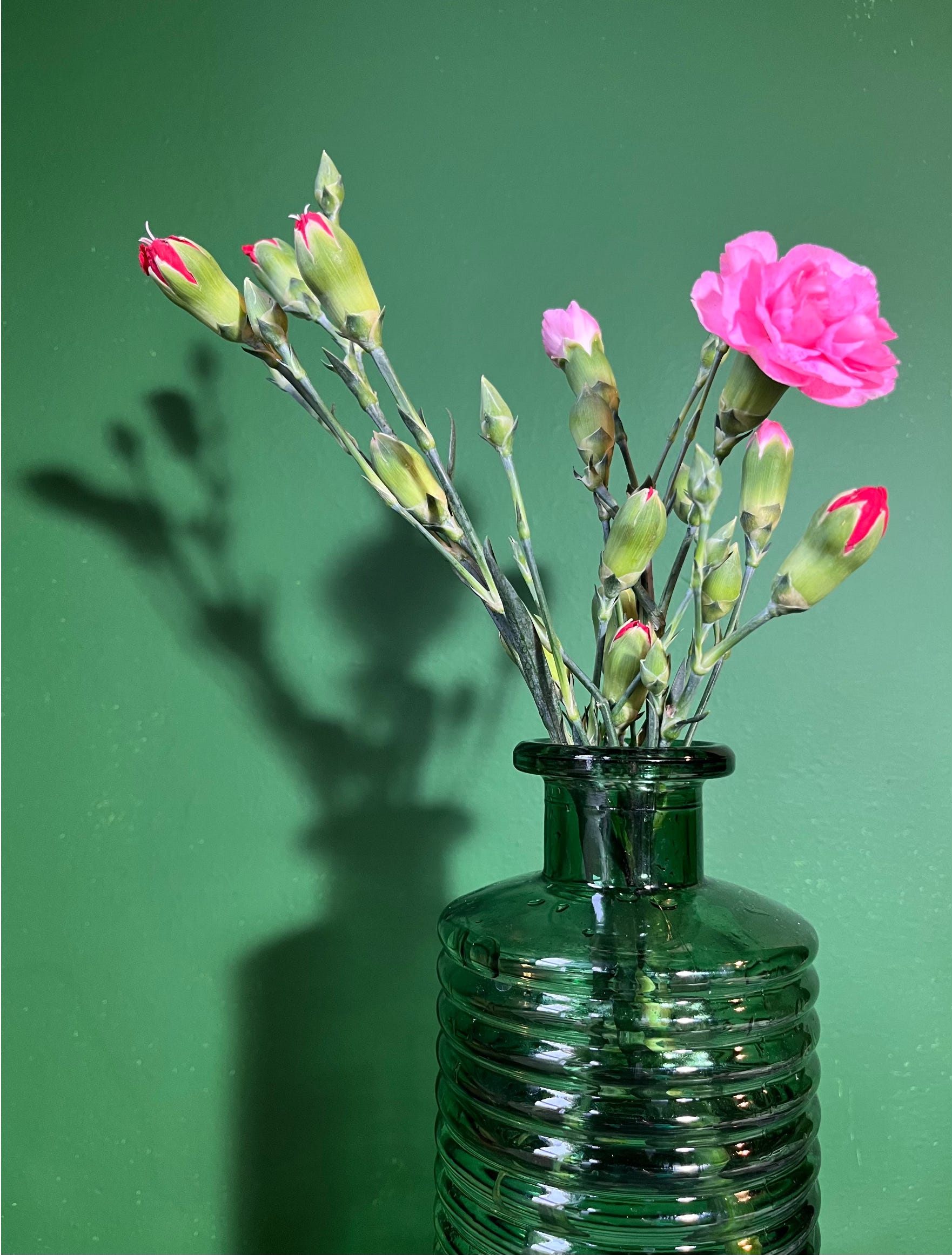
The pamphlet ends with a lovely piece, ‘The green glass vase will break’, which deals, I think, with how to let go. “Broken / is the only way to carry the vase,” she says; “Beat the light into crystals / so that you are free to move”. The vase could stand for a number of things here – her grandfather’s journey, her memories, herself, and the very act of making poetry. It also feels like good counsel for anyone: “don't try to reassemble / the vase; / its old form has gone”. Instead, make something new .
Rebecca Bilkau’s pamphlet Still Life opens boldly. “Death. Here we go”, she says, launching into a fabulous merry-go-round of a poem involving a wide cast of characters – “You, me, the lad down the road / with cornrows and Kierkegaard” – culminating in an invitation, an exhortation, even, to “tango into the storm”. Every detail works, from the neighbour “whose hedge is eternally invasive” to Derek’s “lump as big / as a quince, discovered too late”, and finally the girl “barely shrouded” in the front-page war report. I hesitate to say this, given our recent piece on overwritten blurbs, but this poem really is a bit of a tour de force.
Saddle up, it’s going to be a bumpy (but exciting) ride
A quick look at poem titles reaffirms Bilkau’s subject matter – ‘Last Dance’, ‘Me and the Dans Macabre’, ‘Last Offices’. These are poems about ageing, the death of old friends, funerals, funeral plans, ancestors, inheritance, and the afterlife. Bilkau’s tone is defiant, forceful, confident. Bring it on, she seems to be saying. Death, what have you got for me? Saddle up, it’s going to be a bumpy (but exciting) ride.

But it’s not all sound and fury – far from it. The poignant ‘Relocation’ deals with stillborn children, and what happens to their mothers’ love for them. “The love, the love / runs on, invisible, aimless, a small lost creature // seeking a place to lodge”. ‘Save the Date’ remembers an old friend, now dead: “We’ll meet in Skagan next year, it always was the plan.” It’s a tender and loving poem, and ends, “Antony, we won’t toast your absence: / wherever you are, you’ll be with us there.”
There’s also a rather delicious poem about trying to put together an inherited épergne (an ornate glass table centrepiece), a piece about frozen sugar beets which sparkle, skull-like, “strict as ancestors”, and (at last) a prose poem (about the Buddhist view of the afterlife) that I can read to the end, and really works. Throughout, Bilkau deals with the big themes with refreshing honesty, suggesting that there’s nothing much beyond our own impermanence, and the “preposterous resilience” of love. She even offers us a kind of reassurance in the final poem:
A glamour of morning light on the window pane
and the garden below fuses with my reflection;the lime tree is my spine, our resident chaffinch
footles in my hair, the blessed berried ivy threadsthrough my opening hands. And it settles me, this,
like any simple knowing. I am a body composite:
Get hold of a copy of the pamphlet and read to the end; it’s worth it.
All three pamphlets are designed and set by Mike Barlow of Wayleave Press and published by Litfest and Wayleave. You can buy all three as a bundle for £18 from Litfest, or individually for £7.
Rebecca Bilkau is managing editor of Beautiful Dragons Collaborations, which publishes themed anthologies where established voices encourage new poets into print. Her own poetry has been published by Oversteps Press and Wayleave Press and several magazines, as well as forming the libretto for the cantata A Blessed Round. She divides her time between Arnside, Cumbria and Wolfenbüttel, Germany.
Maria Isakova-Bennett has won and been placed in national and international competitions, has a Poetry Society Peggy Poole Award and a New North Poet Award. She has published five previous pamphlets and created mira, a pamphlet and exhibition with John Glenday. She is reviews editor for Orbis and creates the limited edition hand-stitched poetry journal Coast to Coast to Coast. She lives in Liverpool.
Clare Proctor teaches English and is a member of the Brewery Poets. Her poetry has appeared in magazines including The North, Finished Creatures and Poetry Review, as well as in anthologies of Northern writing from Handstand Press and Saraband. She lives in Penrith.
As well as browsing our Substack, it’s worth visiting The Friday Poem website where you can browse our Archive of more than 700 posts dating back to early 2021. For example, if you’d like to know more about Wayleave Press, read Richie McCaffery on two Wayleave Press pamphlets – Rib by Sharon Black and After by Jane Routh, or Matthew Paul on A Land Between Borders (Templar Poetry, 2023), the most recent collection from Wayleave editor Mike Barlow.
Help support The Friday Poem — buy us a coffee to help us stay awake as we strive to bring poetic excellence to your inbox every Friday. If you can't afford to donate, no worries, we’re going to keep on doing it anyway! Big thanks for everything, you lovely poetry peeps.