


Few places punch as impressively as Mexborough, where Ted Hughes and Harold Massingham grew up in the 1930s and ’40s, both attending the town’s grammar school. Thirty years later, Ian Parks followed in their footsteps, but since then has forged his own distinctive poetry path.
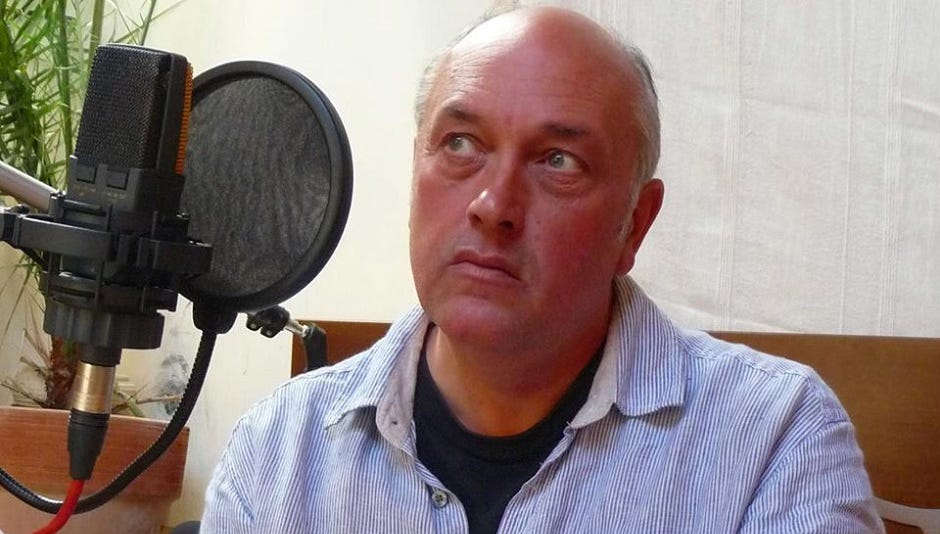
Mexborough lies in the South Yorkshire coalfield, and Parks’s inherited memories, and dread, of his father’s ever-dangerous career loom large. In ‘The Cage’, we see Parks’s gift for illumination as clear and bright as that of his dad’s miner’s lamp:
The cage was lowered
on a rusted thread;the men were crowded in
behind steel bars.
And then beganthe drop into the dark –
a sharp descent
that took the breath awaywhich afterwards he heard
in his worst dreams.
Through me his dreams persist.
Here Parks demonstrates a knack for knowing when not to adorn description. The straightforward adjectives nonetheless carry considerable weight because of their simplicity – the precariousness of that “rusted” for example – and the short-line and short-sentence form cleverly mirror the cage’s descent.
It is no mean feat to write this well about ‘political’ subject-matter without letting partisan emotion overwhelm the poetry
Among Parks’s major achievements is how he has addressed the bitter times and legacy of the 1984/85 miners’ strike and the subsequent demolition of the industry and its communities. It is no mean feat to write this well about ‘political’ subject-matter without letting partisan emotion overwhelm the poetry. Parks does so with admirable restraint and subtlety, and by placing it within the broader context of English history with its still-palpable struggles and scars of previous bloody conflicts:
Like this at Wakefield, Towton, Marston Moor
or any place where men have come together
to settle a dispute by force of arms:helmets in the sunlight, push of pike,
a trampling down by horses in the mire.
(‘Orgreave’)
The poem ends brilliantly with the personal: “my father bringing home a bloody nose / to show he’d not been slacking in the fight.”
In ‘The Wheel’, Parks depicts ‘the slow dismantling’ of the collieries: “The slag heap was grassed over; it became / an innocent green mound where cattle graze.” Parks’s poem imagines a reversal of, and a revenge upon, Thatcher’s destruction:
Someday we’ll come with picks and dynamite,
dislodge it from its concrete plinth.
We’ll drag it from the valley floor,
aim it at the cities of the south,
set the wheel in motion, watch it roll.
Key to those lines is the use of ‘we’, the northern working-class community, in which some remain ostracised years later:
Sitting at the far end of the bar,
ignored by those who went on strike,
they spend all afternoon over one pintor stare down at the carpet’s threadbare swirls.
(‘Strike Breakers’)
In that precise, unforgettable image, does the reader discern a hint of sympathy for the breakers’ desultory plight? Perhaps; but that – and how the poem and its title deliberately eschew the word ‘scabs’ – should not be taken as a sign that Parks’s affinity is anything but very clearly with those who “scraped the slagheap / for a bucket full of coal // or held the line at Orgreave”.
As an illustration of how well he writes about those who fought – and implicitly those who are still fighting – to gain full rights and recognition from the ruling class, Parks brings his tremendous ‘Jarrow March’ to a heartfelt conclusion:
And now the last of them is dead
I look out on the dripping rain
and wonder what it meantor what it means to live without a voice
in this bland, slipshod democracy
we need to reinvent.
His masterpiece, ‘Elegy for the Chartist Poets’, lightly, but no less impressively, distils, over 86 couplets in six sections, his clear-sighted erudition, and indisputably proves that he is as fine a poet about English political history as anyone writing today:
In Manchester, in Sheffield, and in Leeds –
in all the places where their mark was leftthe statues of the undeserving rich
gaze down impervious from their stone-hewn plinths.The traffic slides and judders to a halt
where shopping centres interrupt the flowof what we were and are or might still be.
Your songs preserve the bite and spleen of itand when you sing them without compromise
the voices of the dead who sang beforejoin in to swell the chorus of your song.
The commanding register and details of these lines surely allude to, and bear comparison with, Lowell’s ‘For the Union Dead’. Note how that “stone-hewn” pointedly implies so much.
But Parks should not just be pigeon-holed as a political poet, because his range is wide. His love poems are rightly esteemed for how perceptively he writes about matters of the heart
But Parks should not just be pigeon-holed as a political poet, because his range is wide. His love poems are rightly esteemed for how perceptively he writes about matters of the heart, as in ‘The Lighthouse’: “This is what it’s like to be in love: // to find perspectives shifting constantly; / to always be approaching some fixed point / but never arriving at its source”. Sometimes his romanticism is tinged with even more melancholic regret, none more so than in the beautiful ‘A Last Love Poem’, where the imagery exemplifies his trademark concision and turns of phrase:
That’s what it feels like these years on:
you were quite unexpected and it seems
I’ve used up all the images I know –
midnight stations, coastal roads,
red wine, high windows, lace and sudden snow.
Don’t be surprised if language fails me now.
I turn to face the sunlight. Let it go.
Here, too, as always, Parks lets the words dictate the length of the line and the poem’s overall form.
The book also contains superb evocations of place, both far-flung and nearer home, such as ‘Anderby Creek’, with its echoes of Larkin: “Something had edged me closer / to the brink, dissolving my identity // in sea and sand and air.”
What should a ‘selected’ ideally provide? A general introduction to the breadth of the poet’s oeuvre, which might then prompt the reader to seek out the collections? A mid-career retrospective which consolidates the poet’s reputation? A collation of all the flashier ‘greatest hits’ alongside slow-burning, quieter and often more resonant poems? In a beautiful production from Bob Horne’s Calder Valley Poetry, this generous selection fulfils all those objectives, and more.
Matthew Paul lives in Rotherham and worked for many years in local authority children’s services. His first collection, The Evening Entertainment, was published by Eyewear in 2017 and his second collection, The Last Corinthians, was published by Crooked Spire Press in 2025. He is also the author of two haiku collections, The Regulars (2006) and The Lammas Lands (2015), and co-writer/editor (with John Barlow) of Wing Beats: British Birds in Haiku (2008), all published by Snapshot Press. Matthew Paul’s blog is here.
Vital Statistics: The Friday Poem is run by four people – Hilary Menos (Editor), Helena Nelson (Consulting Editor), Bruno Cooke (Spoken Word Editor) and Andy Brodie (Web Editor), with contributions from a team of reviewers and writers.
Until recently we maintained the Friday Poem website (thefridaypoemdotcom) as an archive of 700 posts published between 2021 and 2024 (including most of the original Friday poems) but following a hack in late April we decided to take this down. We’ll be republishing some of these posts – Friday Poems, features and reviews – here on Substack.
Help support The Friday Poem
Buy us a coffee to help us stay awake as we strive to bring poetic excellence to your inbox every Friday. Heartfelt thanks to everyone who donates, especially to our regular donors. If you can’t afford it, no worries, we’re going to keep on doing it anyway! Big thanks for everything, you lovely poetry peeps.
Some lovely lines of Parks’s poetry included here. But those from ‘Jarrow March’ - wow: “or what it means to live without a voice / in this bland, slipshod democracy / we need to reinvent.” They reverberate today.
It seems to me he may have agreed with Orwell that all art is political. Curious whether you think that’s right? Though I also like your point about not pigeon-holing him, because the love poems sound powerful too. Very much enjoyed reading this.